The economic case for strong and varied government actions to cut greenhouse gas emissions is simple: current energy markets are loaded against adequate action. At least five reasons for this need to be acknowledged if we are to accelerate global action to tackle the crisis.
First, the damage from greenhouse gas emissions is inadequately (if at all) priced in markets. Almost all economists’ estimates of the global damages from a tonne of CO2 emissions far exceed the price being charged for emitting. A consensus study convened by the US National Academies estimated a central ‘damage value’ of US$185 per tonne emitted; the global average price charged is just a few dollars.
Second and related, our capital markets fail to price the future appropriately, favouring investor returns over the welfare of future human beings. As Martin Wolf noted in the Financial Times, ‘the returns today’s investors seek imply that the welfare of future human beings is close to irrelevant.’
Third, most international fossil fuel transactions, both investments and sales, are in dollars: thus they face no exchange rate risks. Most renewable energy investments, in contrast, generate electricity, sold in local currency. The developing countries that most need foreign investment thus face a sizeable premium on cost of international capital to account for currency risk on renewables, but not for fossil fuels.
Fourth, many electricity systems have moved from long-term contracts to markets in which the “marginal” generator — the most expensive one needed to meet demand, based on the existing stock — sets the price for all. This means that fossil fuel plants, inevitably more expensive to run than wind or solar, are largely “self-hedged” — the wholesale market reflects their input costs (and indeed, they would pass on carbon costs). Purely market-based investment in renewables, however, would ironically bear all the price uncertainties arising from fossil fuel price volatility, again driving up their cost of capital.
Finally, investment in newer technologies typically brings greater innovation than expenditure on incumbents. The technological progress from investment in clean energy over the past 15 years has indeed been extraordinary, with radical and transformative breakthroughs.
But these benefits are economy-wide, and ultimately global; individual investors can only capture a small fraction of the benefits. In economic terms, the innovation-related economic returns to clean energy investment are much bigger than from fossil fuels, but markets alone cannot deliver them. However, smart public policy can — and must.
Michael Grubb is Professor of Energy and Climate Change & Deputy Director, at the UCL Institute for Sustainable Resources. He is the academic lead of the Energy strand of the UCL European Institute’s current Jean Monnet Centre of Excellence Programme.

The following article builds on a letter published by Prof Grubb in the Financial Times as No need for markets to be stacked against clean energy (12 July 2024).
Note: The views expressed in this post are those of the author, and not of the UCL European Institute, nor of UCL.
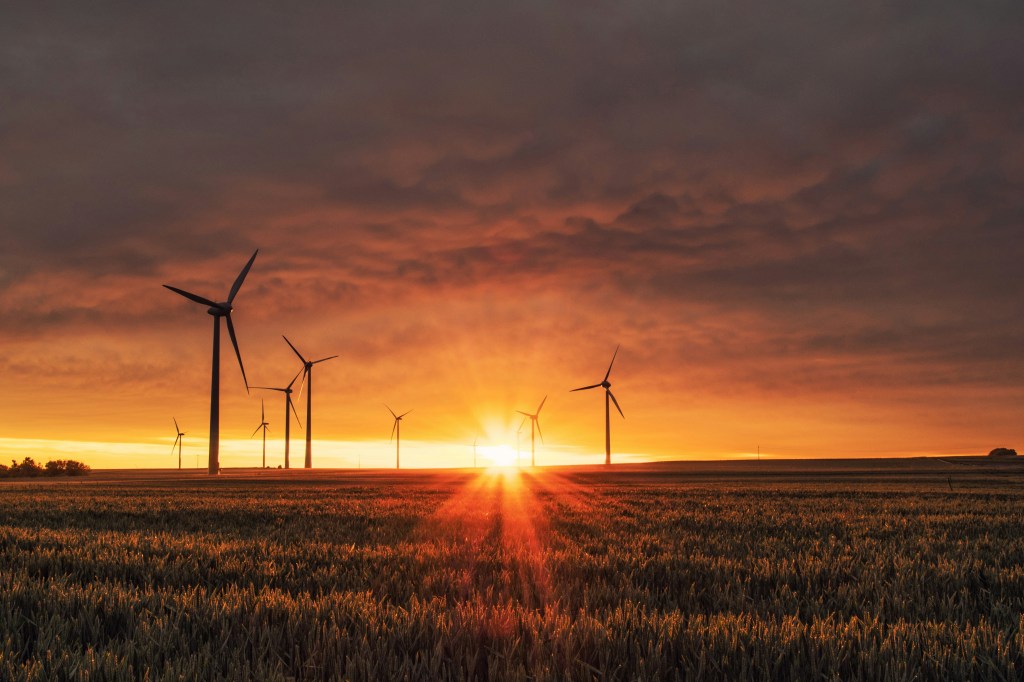
Image: Windfarm in Biedesheim, Germany, by Karsten Würth on Unsplash.




 UCL EUROPE Blog
Leave a comment