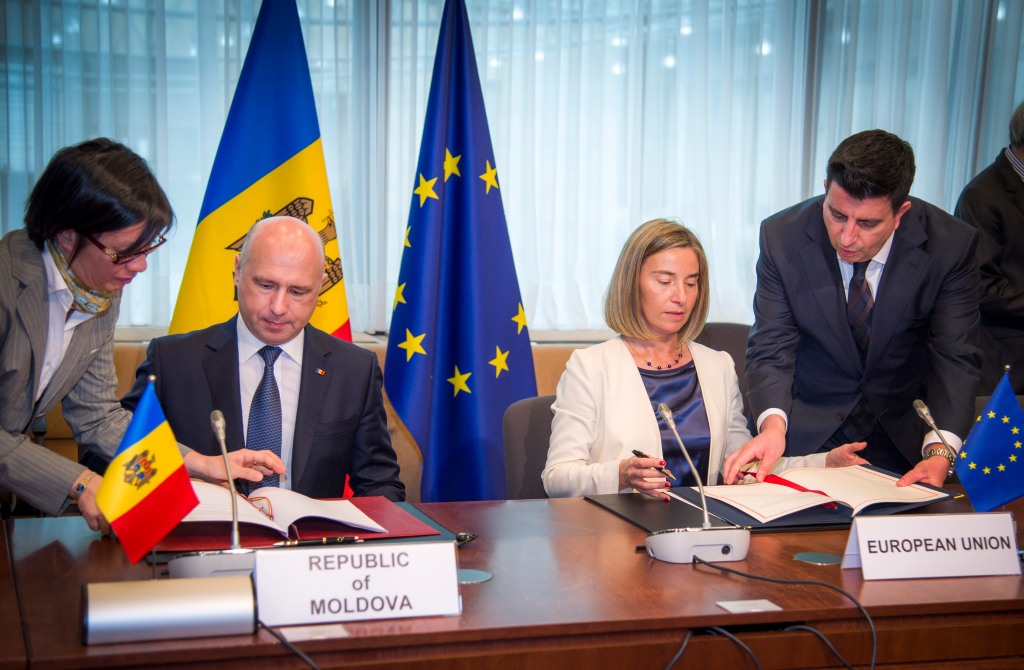
UCL graduate Valeria Topalo discusses the obstacles to Moldova’s accession to the EU.
Situated between Romania and Ukraine, Moldova attained EU candidate status in June 2022. Against the backdrop of the war in Ukraine and threats from Russia, the road ahead is fraught with challenges.
Who are the Moldovans?
Moldova’s identity is a mosaic of historical influences. Beginning in the 1350s as the principality of Moldavia, it absorbed elements from Byzantine, Slavic, and Hungarian cultures. Over the centuries, it shifted between being a vassal of the Ottoman Empire, part of the Russian Empire, in a union with Greater Romania after World War I, and member of the USSR in 1940-41 and after World War II.
This intricate past has forged a diverse population; predominantly, ethnic Moldovans who share close cultural ties and language with Romanians, and Moldovans with mixed Ukrainian, Russian, Bulgarian, Turkish, or Jewish roots. Around one third of Moldovans have Romanian citizenship.
Moldova’s identity has also been shaped by the competing narratives offered by Russia and Romania. Russia emphasises ties to Russian-speaking individuals with Soviet connections, while Romania sees Moldova as part of a broader European narrative.
Moldova’s Identity Crossroads
The nation’s cultural divide is reflected in generational and regional differences. While the younger generation leans towards EU opportunities, some older generations cling to Soviet nostalgia; regions like Transnistria and Gagauzia also harbour warm sentiments for the USSR and the East.
Moldova’s recent decision to rename its official language from Moldovan to Romanian has sparked controversy, although Moldovan and Romanian are essentially the same language. This change primarily signifies a shift towards a Romanian and EU identity and can be seen as part of a broader de-Russification effort, which includes renaming streets and parks.
Some, especially those with Russian linguistic and cultural ties, fear it might ultimately lead to unification with Romania, potentially jeopardising Moldova’s sovereignty and their native Russian language.
Moldova’s all-time high inflation rate of 34.6% in October 2022, a result of the country’s decision to reduce its total reliance on Russian gas, has also played into existing divisions. Many see it as vindication of their belief that life was “easier” during the USSR – or when closely tied to Russia economically. However, many others praise the move as necessary to distance themselves from any elements that might entail a risk of further alignment with Russia.
Corruption
Corruption, deeply rooted in Moldova’s political landscape for three decades, is a serious obstacle to EU integration. Past scandals, including the laundering of over $20 billion, continue to cast a long shadow. While Moldova aspires to democracy and the rule of law, breaking free from deeply entrenched corruption is challenging; there is a significant psychological barrier as people have grown accustomed to a system that has persisted in the country for a long time.
Nevertheless, people’s determination and the progress they have made do offer hope. The European Commission recently recognised that Moldova has implemented three out of nine conditions in the country’s EU accession hopes. The Moldovan President recently announced the establishment of a new court for major corruption cases that will aim to enhance Moldova’s qualifications for EU membership. Corruption and weakened institutions remain the primary hurdles to overcome, with justice reform a top priority for the current Chisinau government.
Into the European fold?
Despite some internal divisions, a pro-European sentiment has grown significantly among Moldova’s population. On May 21, 2023, around 75,000 Moldovans gathered in the capital square to support the country’s push for EU membership and break away from Moscow. With speeches in Moldovan, Ukrainian, Russian, and Gagauz, the rally aimed to show internal unity and pressure Brussels to start accession talks.
Art. 49 TEU stipulates that “[a]ny European State which respects the values referred to in Article 2”- which include the rule of law, democracy, human rights, and non-discrimination – “and is committed to promoting them may apply to become a member of the Union.” But EU enlargement is vulnerable to populist backlash, with movements and governments rejecting these values and reverting to particularist and ethnonationalist conceptions of identity.
In terms of integrating Moldova, education is undoubtedly a critical aspect that the EU can address. The country’s education system has faced challenges, and support in improving its quality can be instrumental in strengthening democracy building and meeting the Copenhagen criteria.
Messages of solidarity are another: The recent European Summit, where Moldova was represented, marked a significant moment. European Commission President expressed unwavering support, referring to Moldova as the “heart of Europe.”
But difficult questions remain. Accession has implications for how EU budgets would be divided up. Enlargement has huge consequences for the EU in terms of finance and decision-making, raising potentially divisive questions about how the EU can reform itself sufficiently to develop the capacity to absorb new members.
Why the EU would want to embrace Moldova
While there may be concerns about Moldova’s history of corruption and about repeating a Hungarian or Polish scenario of letting a country join that may backslide, there are compelling reasons for the EU to help Moldova join.
In light of Russian aggression in Ukraine, enlargement is something that has become inevitable and is required to stabilise the European continent, consistent with the EU’s mission and identity as a peace project. Integrating Moldova would honour the origins of the European Project. As stated in the CJEU Judgment of 2022 in the cases initiated by Hungary and Poland about the rule-of-law conditionality mechanism, “Article 2 TEU is not merely a statement of policy guidelines, but contains values which… are an integral part of the very identity of the European Union as a common legal order.”
Indeed, Moldova’s unique culture and perspective would enrich the cultural fabric of the EU, promoting understanding and appreciation among member states. The country’s Soviet background offers a different lens through which to address issues, fostering inclusive discussions and better-informed policies. It is crucial not to close doors but instead adopt a fair and balanced approach that aligns with the EU’s core values.
Valeria Topalo is an Alumna of UCL Laws (LLB Law 2022), and an aspiring International Human Rights Barrister, currently employed as a Policy and Advocacy Officer at Stop Uyghur Genocide.
With Moldovan and Ukrainian heritage, native Russian language, and dual Moldovan and EU citizenship, Valeria offers a unique perspective on this small nation straddling the prospect of a European future and the legacy of Soviet influences.
Note: The views expressed in this post are those of the author, and not of the UCL European Institute, nor of UCL.
Featured image credit: European External Action Service
 UCL EUROPE Blog
Leave a comment