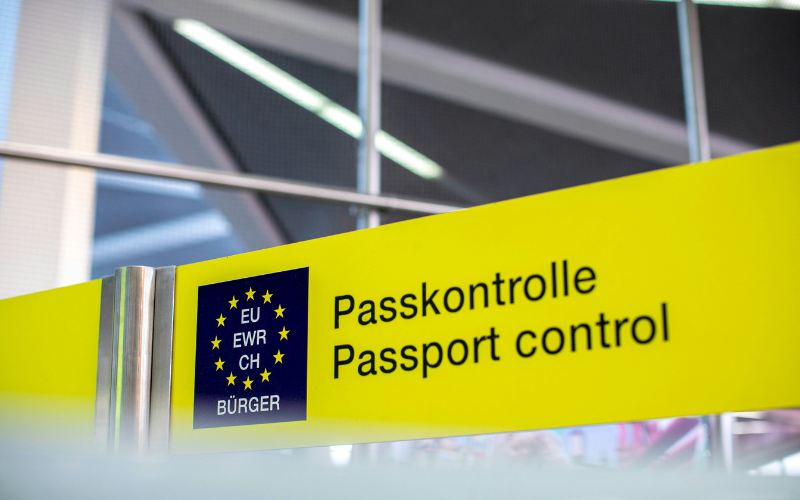
Mette Louise Berg, Silke Zschomler, and Laura Casu discuss their research findings regarding recent trends in European migration policies
Along with colleagues across Europe, we have recently conducted research to find out how European governments responded to large numbers of protection seekers in 2015-16 as compared to 2022-23.
We asked: What are the main differences between European government responses in the two periods? Are European asylum and integration policies for protection seekers becoming more liberal/generous or more restrictive? Are they becoming more selective or more universal? Are they characterised by increasing temporariness or by more permanent measures? Finally, are those fleeing Ukraine specifically treated differently from other protection seekers? We looked at Austria, Denmark, Finland, Germany, Norway, Poland, Sweden, and the UK.
Most European countries saw large numbers of people arriving to seek protection in 2015-16, largely driven by wars in Syria, Afghanistan, and Eritrea. In the following years, stricter national border policies, the 2016 EU-Turkey Statement and Action Plan, and then the COVID-19 pandemic, led to a reduction in the number of people who were able to cross Schengen borders.
In February 2022, the full-scale Russian invasion of Ukraine led to the displacement of millions of people from Ukraine, both internally within the country and across borders to other European countries. At the same time, the numbers of asylum seekers from other countries also increased in many European countries with Syria and Afghanistan continuing to be the most significant countries of origin.
What did we find? The number of people seeking asylum in European countries has varied significantly over the past decade, with 2015/16 and 2022/23 being the absolute peak years. Several of the countries included in the research, such as Germany, Sweden, Austria, and Norway, were among the countries that received the highest numbers of people seeking asylum arriving in 2015/16 to Europe, both in absolute numbers and relative to their populations.
More restrictions: A race to the bottom?
Although there has been a more unified response towards Ukrainian refugees across Europe in 2022, there are substantial differences in Ukrainian refugees’ rights and restrictions between the countries. In some countries and for some policy areas, Ukrainian refugees have more liberal rights than other refugee groups. However, in other areas, Ukrainian refugees have more restricted access to services in the host countries and, overall, they have more temporary permits than others.
Our analysis highlights a move towards more restrictive, selective, and temporary policies. Almost all the countries that we analysed introduced more restrictive policies related to protection statuses after 2015. The restrictions came in many different policy areas, such as protection permits, legal assistance, family reunification, and financial assistance, to name but a few. Rather than a unified response across Europe, these restrictions have been described as a ‘national race to the bottom’, with countries competing to have the most restrictive policies.
Special measures for people fleeing Ukraine
In 2022, the main policy changes were related to displaced persons from Ukraine. Here we found that the responses across the countries were much more unified, at least in terms of granting protection. All countries – except for the UK – implemented a form of collective, temporary protection for displaced persons from Ukraine. EU countries activated the Temporary Protection Directive, which is largely mirrored by national legislation in Denmark and Norway. This grants Ukrainians temporary protection for up to three years. The Nordic countries channelled applications from Ukraine through the regular asylum system which made formal application for protection necessary, although the collective protection simplified the procedure and there were elements of online registrations and automatic processing of applications. Germany, Poland, and Austria did not channel them through the regular asylum system, but introduced registration procedures that granted rights upon registration, or just by having a Ukrainian passport. The UK did not implement temporary collective protection mirroring the EU, but rather introduced three different bespoke visa-based schemes which allow Ukrainians and certain family members to come to or remain in the UK. The schemes provide the right to stay in the UK for an initial three-year period. However, the Ukraine-specific schemes do not confer refugee status on protection seekers. Also, those entering or remaining in the UK under the three schemes do not enter the asylum system.
The role of civil society
Civil society, private actors, and NGOs played a crucial role in aiding protection seekers and assisting governments in both 2015/16 and 2022/23. The assistance from private persons and civil society during these periods of high influxes was essential in all countries, although there are differences between the Nordic countries and the rest.
Conclusion: differentiated rights and restrictions and increased temporariness
Most countries we looked at introduced selective policies for displaced persons from Ukraine. However, this selective trend was not a new phenomenon: several countries introduced differentiated rights and restrictions for various subgroups already before and after 2015, distinguishing permits and rights based on either country of origin, religion, or mode of arrival.
We also observed a general pattern towards a more temporary perspective for all protection seekers in most countries. This trend had already been adopted in 2015 in many European countries’ asylum, immigration and integration policies, but has become particularly prominent through the activation of the EU Temporary Directive and similar national legislation for protection seekers from Ukraine. Although most of the countries included in our analysis have moved towards more restrictive, selective and temporary policies for protection seekers, there are substantive differences between the countries concerning both the degree and scope of these overall trends, and the policy areas where such changes were made. It will be important to continue monitoring these trends and to understand the impacts they have on people’s lives and livelihoods.
Mette Louise Berg is a social anthropologist with research interests in migration, diasporas and migrant transnationalism; urban diversity; gender, belonging and generation; and social memory. Regionally, she specialises in Cuba and the wider Caribbean and Latin American region, and London and the UK. She is Professor of Migration and Diaspora Studies at the Thomas Coram Research Institute, UCL Social Research Institute.
Silke Zchomler is a Research Fellow at the Thomas Coram Research Unit, UCL Social Research Institute as well as at the Institute for Global Health and an Associate Lecturer (Teaching) in the the Department of Education, Practice and Society. Her research is situated at the nexus of migration and displacement, inequality, urban multiculture and diversity, language/language learning and the in- and exclusionary mechanisms of ‘integration’ processes.
Laura Casu is a doctoral researcher at UCL, Social Research Institute. Over the past fifteen years, she has conducted research on poverty reduction and inequity redressal, including studies on migration and internal displacement. Her research and impact evaluation work includes mixed methods studies in sub-Siberian Asia, Africa, Latin America, and most recently Europe. Her PhD research focuses on in-work food insecurity in high-income settings.
Partners and funding
The Norwegian Institute for Urban and Regional Research led the research together with colleagues from UCL, the University of Eastern Finland, the University of Warsaw, the German Centre for integration and Migration Research (DeZIM), and the University of Vienna. The research was financed by IMDi – The Directorate of Integration and Diversity in Norway.
Further reading
The comparative analysis and individual country reports can be accessed here: https://oda.oslomet.no/oda-xmlui/handle/11250/3112660
A recording of the launch event is available here: Many have sought protection – how is Europe responding? – FilMet (oslomet.no)
Featured image by Daniel Schludi via Unsplash
Note: The views expressed in this post are those of the author, and not of the UCL European Institute, nor of UCL.
 UCL EUROPE Blog
Leave a comment