
This article forms part of our series on perspectives from across UCL and beyond on the changing geopolitical order, and the implications for Europe, the European Union and the EU-UK relationship. Find more articles here.
“Hey, boys, are you ready? Then we’ll push off together. From the Peipsi shore we’ll push off this little land of Mary.”
Thus begins “A Push-Off”, a massively popular song in mid-1980s by an Estonian folk-singer-songwriter quartet of Johanson siblings. The Soviet authorities banned the song because of its call for Estonia’s separation – poetically known as “the Land of Mary” – from Russia, on the other side of Lake Peipsi.
Even after the Baltic states gained independence and drifted away from Russia politically, mentally and economically, the song still captures something of a foreign policy utopia of the Baltic states: a dream of rowing as far away as possible from Russia and its dangerous historical revanchism.
While physical relocation is impossible, the Baltic states have continued to push away from Russia. Most recently, in February 2025, they finally unplugged themselves from the Brell (Belarus, Russia, Estonia, Latvia and Lithuania) power grid and joined the EU’s electricity network. This high-stakes operation – amidst the risk of potential Russian diversions – was celebrated in Vilnius, with Ursula von der Leyen, the president of the European Commission and Andrzej Duda, the Polish president, joining the Baltic leaders.
Following Russia’s full-scale invasion of Ukraine in February 2022, the Baltic states accelerated their efforts to wean off Russian gas and oil. For example, Latvia’s imports of Russian oil and gas products declined by more than 80% between 2022 and 2024. All three Baltic states increasingly rely on natural gas imports from a floating Liquified Natural Gas (LNG) terminal in Lithuania, launched in 2014 and evocatively named “Independence”. In November 2024 the vessel started flying a Lithuanian flag, marked by another high profile ceremony.
Since their independence and the start of their “Return to the Western World”, the Baltic states have tirelessly warned the West against ignoring the dangers posed by resurgent Russia and unilateralist pacifism in general. More often than not, they found themselves to be part of “new Europe” rather than “old Europe” that tended to have a naïve dovish view of the world. “New Europe” often sided with the United States, not only participating in the mission in Afghanistan triggered by NATO’s Article 5 after the 9/11 attacks in the US, but also in the US-led “Coalition of the Willing” in Operation Iraqi Freedom which faced resistance to several continental “old Europe” countries.
While the Baltic states have been as active members of the EU as NATO, they have typically been cautious over European defence initiatives and prioritized the Trans-Atlantic relationship. They have gone to great lengths to prove their credentials as credible NATO members rather than freeloaders by increasing their military spending above required targets already before 2022. The Baltic states arguably not only face a risk of a conflict but are already the front-line in a hybrid war, targeted by cyber-attacks, diversion of undersea critical infrastructure, the influx of refugees which Russia and Belarus are orchestrating to destabilize the countries, ruthless Russian propaganda, particularly targeting the Russian-speaking population in Estonia and Latvia, and constant if (so far) low scale provocations on the borders.
To say that the geopolitical ruptures since the start of Trump’s second term challenged this picture is an understatement. The Baltic states have been trying to adapt to the new era of “transactional” foreign policy, for example by investing in their defence industries and increasing defence spending even further. However, they feel increasing affinity to “old Europe” – not only because the United States seems a less reliable partner than before, but also because West European countries have become much more alert to the dangers posed by Russia to the whole continent over the last three years. For example, it is hard to underestimate the changes in German foreign policy – from Chancellor Merkel’s naïve positive engagement policy of building bridges and pipelines to the country loosening its sacred debt limits to substantially boost defence spending in March 2025.
While the West European resolve over Ukraine and boosting of defence has been too weak and hesitant from the Baltic perspective, it has probably been stronger than many anticipated in February 2022. At least it is now widely acknowledged that a war in Ukraine is a severe security concern for the whole of Europe. Still, a major prerogative of the Baltic states remains not to be ignored again, forgotten, or simply taken for granted. This is why the UK’s failure to invite the Baltic states to the Lancaster House summit in March 2025 upset them deeply. A key objective of Baltic diplomacy remains to prevent Starmer, Macron, Merz, Meloni, Rutte and others becoming modern day Chamberlains who infamously dismissed Czechoslovakia as “a faraway country … of whom we know nothing”.
These concerns are anything but paranoid. The recent pre-war German enthusiasm over gas pipelines – Nord Stream opened less than 14 years ago and Nord Stream II was completed only in 2021 – evoked nightmares of the Hitler-Stalin (Molotov-Ribbentrop) Pact, an unholy alliance between Germany and Russia over the heads of the lands in between. The current rapprochement between Trump and Putin raises the spectre of NATO and its security guarantees becoming dysfunctional, and possibly even of another great power grand bargain to divide the world. This casts a further shadow on the utopian dream of pushing the Land of Mary away from Russia, as the West offers a weaker sense of safety.
Professor Allan Sikk joined UCL SSEES in 2007, after receiving his PhD from Tartu University and working as the head of the Estonian parliament’s research service. At UCL, much of his research has focused on Central and Eastern Europe, using a common analytical lens for the study of democracies old and new. He believes that the study of politics can and should be equally informed by classic models of comparative politics, largely based on Western Europe, and often more idiosyncratic insights from new democracies.
Note: The views expressed in this post are those of the author, and not of the UCL European Institute, nor of UCL.
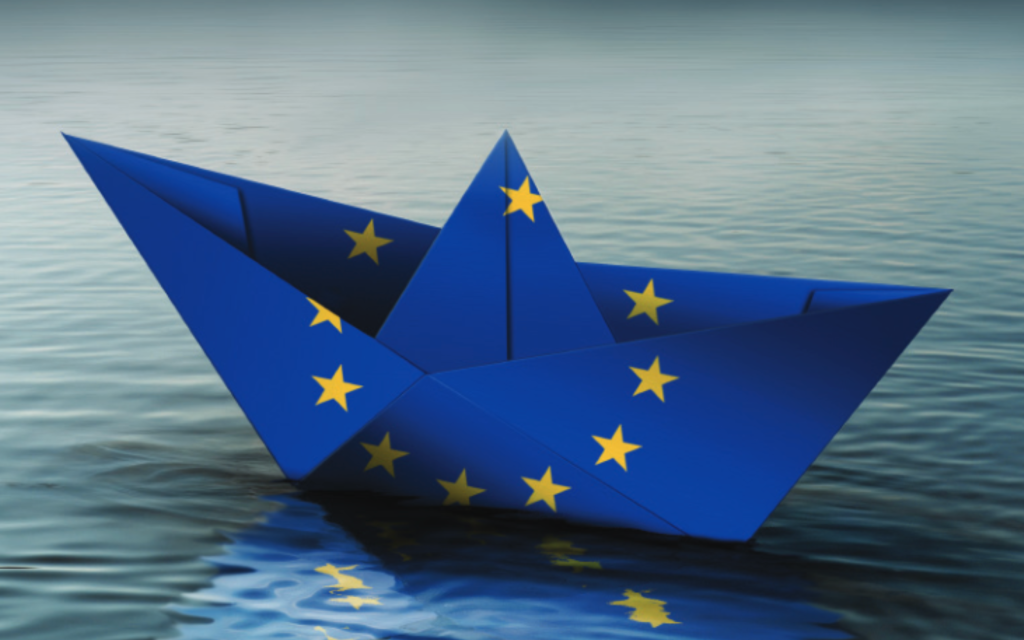
Featured Image: Picture taken by Tobias Wilden via Unsplash
 UCL EUROPE Blog
Leave a comment