Is It Springtime For Hungarian Democracy?
By Zsofi Stavri & Jessie Barton Hronešová
On 12 April, an era ended with the electoral defeat of Hungary’s political hegemon. For 16 years the Fidesz party and its leader, Viktor Orbán, held sway over the country. A record turnout of 79.56% and high levels of support from under-30s in particular (67% versus 8% for Fidesz in pre-election opinion polls) the two-year-old opposition party Tisza won 141 out of 199 seats in the Hungarian parliament with 53.18% of the vote. Despite a markedly uneven playing field, Péter Magyar, the leader of the victorious Tisza party and a former Fidesz insider-turned-defector, won with a two-third constitutional majority.
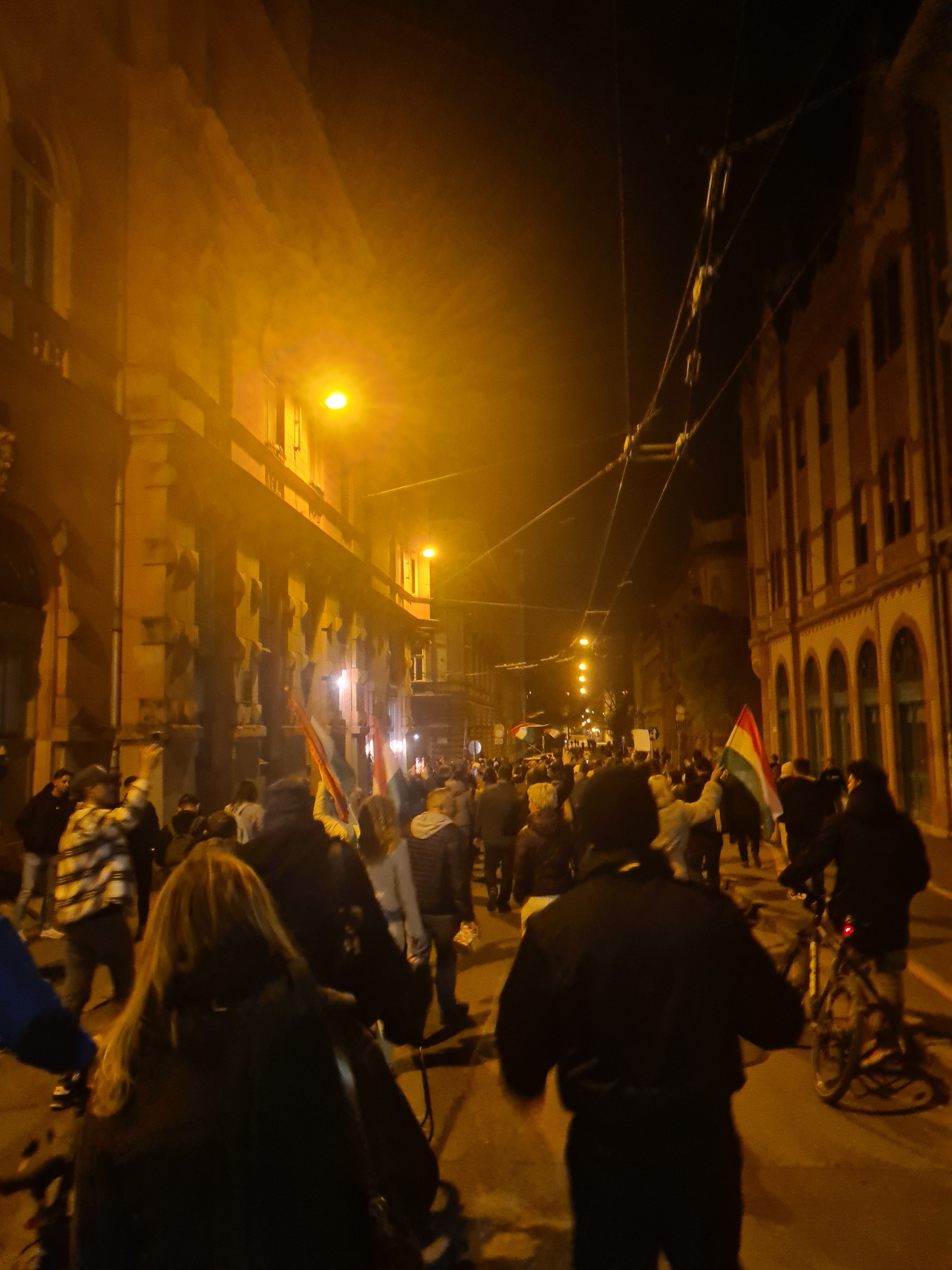
As the results were announced two hours after the polls closed, people flooded the streets, dancing, crying, and hugging. The moment was both energizing and filled with immense relief. Tisza and new Prime Minister Péter Magyar are channelling this excitement by hosting a celebration in front of Parliament on 9 May to mark the government’s accession. “Let there be dance!”, Magyar declared. The joyful mood is also captured in opinion polls: 54% of Hungarians are optimistic about the country’s future against 27% pessimists, a sharp shift from before the elections (when it was 33% to 60% respectively).
Can Magyar deliver?
Given the large expectations from the new government, can it deliver? Can Magyar keep his promise to turn Hungary into a rule-of-law state again?
Reigning in corruption is indeed the first challenge. With packed courts, rampant graft, financial embezzlement, and the institutional embeddedness of Fidesz-appointees across the country, it will be a hard nut to crack. Yet the two-third majority allows for sweeping reforms, including constitutional changes. The level of public mobilization can also be a powerful source of legitimacy. For the election, twenty thousand people volunteered to count votes and thousands risked their safety preventing vote buying. This mobilization has sustained itself so far, but whether it will endure beyond the immediate post-electoral euphoria – driven largely by the universal goal of defeating Orbán – remains unclear.
Cabinet picks
Still, rather than relying on general optimism, it is important to examine current actions to see what lies ahead. Importantly, Magyar’s cabinet picks have been well-received and signal a direction that many hoped he would take. The appointments prioritise expertise over party loyalty, featuring figures such as incoming Education Minister Judit Lannert, Transport and Development Minister Dávid Vitézy, the Minister of the PM’s office Bálint Ruff. All were previously unaffiliated with Tisza and enjoy widespread professional endorsement and respect.
The appointment of Bálint Ruff is especially significant, a signal to engage Hungarians across the political spectrum. With a massive online following on the YouTube channel Partizán as a well-respected political commentator, Ruff gained popularity for his passionate advocacy for democratic institutions, rule of law, and the need for accountability. He has already announced the establishment of the National Asset Recovery and Protection Office, which will have a wide remit to recover funds lost to Orbán-era corruption.
Yet he also plans to release communist-era agent files a day before the 70th anniversary of the 1956 revolution. Rejected by the parliament 27 times since 2011, this is a highly symbolic (and both popular and potentially explosive) act that leans into the 1956 significance, marking the importance of memory politics for the new government.
The recent appointment of Tisza’s legal director and Magyar’s brother-in-law, Márton Melléthei-Barna, as Justice Minister has drawn criticism and exposed Magyar to accusations of nepotism. Given Melléthei-Barna’s deep involvement with Tisza since the start, this choice is perhaps less shocking than it sounds at first. However, public expectations for his performance will be exceptionally high, and the appointment underscores the challenges the movement like Tisza will face: identifying strong political candidates without leaning too much into loyalty as the main criteria (after all a trademark of the Fidesz era).
The international stage
On the international stage, Tisza has already commenced efforts to mend diplomatic relations. The reaction from the EU to Magyar’s victory was expectedly jubilant and he has already met with EU leaders. Magyar’s first official state visit will lead to Warsaw: not only to resuscitate the barely functioning Visegrad 4 alliance, but also to learn from the Polish case about losing and regaining access to EU funds, a crucial step for the floundering Hungarian economy. The Polish experience has also made the EU very cautious about reinstating the €17 billion in funds for Hungary. Without them it is hard to see how Tisza can maintain momentum and trust domestically, as it promised to continue and even increase several high-spending policies from the Fidesz era while reigning in inflation. With €10 billion set to expire by the end of August unless rule-of-law conditions are met, time is critical. A potential solution looms, with Magyar promising to sign an agreement that will benefit both Hungary and the EU.
The external support of the EU is important, as Tisza is likely to face a formidable opposition by Fidesz and its proxies, both institutional and economic.
Internal pitfalls and reasons for hope
Opposition, in fact, might also come from within. Tisza voters encompass a broad coalition and have so far been united by their desire to remove Orbán and dismantle the corruption-stricken system. While rule of law is the clear priority for Magyar, many might end up disappointed with far less progressive policies than they would have hoped for (such as on abortion and LGBTQ+ rights). Voters on the right might equally dislike the new foreign-policy direction, which will be more aligned with the EU (such as on Ukraine). However, with the prospect of unlocking EU funds and championing the Hungarian minority in Ukraine, this stance may prove less unpopular than it initially appears. Overall, there will be both continuity (e.g. cultural issues, fiscal policies) as well as changes (e.g. foreign policy, education).
With many questions still open regarding Magyar’s intentions and Fidesz’s future, the fate of Hungarian democracy remains uncertain. Yet there are many hopeful signs. An important one is that Viktor Orbán has announced that he will not take his seat as an MP (a first in post-1990 Hungary) but would seek re-election as Fidesz leader in June.
It may be too early to judge whether Hungary can escape Fidesz’s long shadow, but cautious optimism seems warranted—for now.
Authors:
Dr Jessie Barton Hronešová is a lecturer in political sociology at University College London (School of Slavonic and East European Studies) specializing in Central and Southeast Europe, particularly regarding justice, memory politics, and victimhood.
Zsofia Stavri is a PhD student at UCL SSEES, specialising in post-1989 Hungarian memory politics and memory activism.
The views expressed in this post are those of the authors, and not of the UCL European Institute, nor of UCL.
Photo by Zsofi Stavri on election night.